
Our verdict: 7.5/10
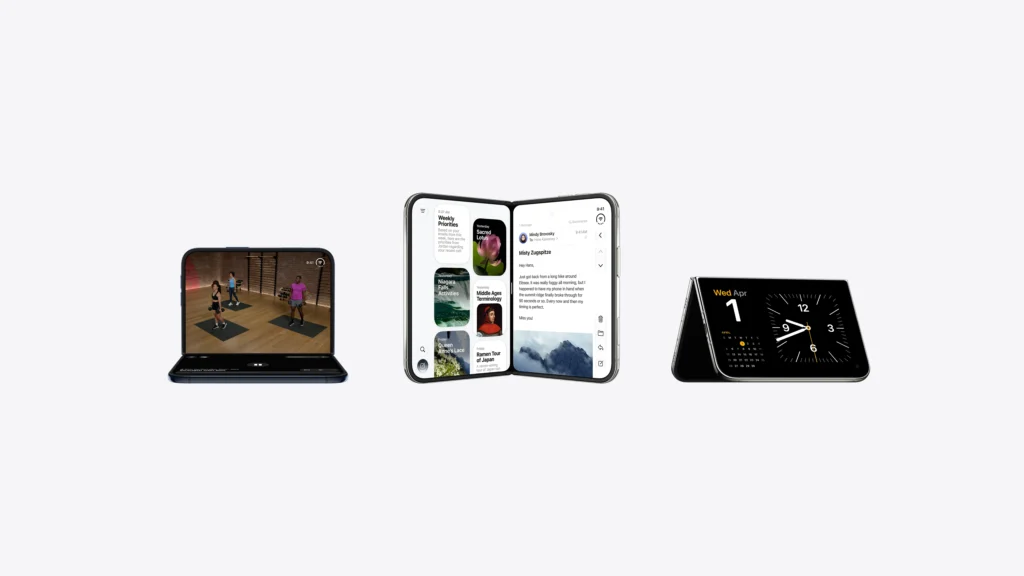
Apple has finally entered the foldable-phone market, and it hasn’t arrived quietly. The iPhone Duo promises something many smartphone users have wanted for years: a phone that fits in your pocket but opens into a screen big enough to make working, watching videos, reading, and multitasking genuinely enjoyable.
But here’s the thing. Just because you can make a phone fold doesn’t automatically mean you should spend > ₹299900.00 on one.
The iPhone Duo is an impressive piece of engineering. It also makes some questionable compromises that are difficult to ignore at this price. Let’s look at what really matters.
1. Design: Apple has done its homework
Something is appealing about the idea of carrying one device instead of a phone and a small tablet. Closed, the iPhone Duo has a 5.4-inch outer display. Open it up, and you’re looking at a much larger 7.6-inch screen.
That transformation is the main attraction, and Apple seems to have put considerable thought into the details. The titanium frame feels premium, the hinge is designed to hold different angles, and the phone has a wider, passport-like shape rather than the narrow design associated with some older foldables.
The biggest design win might actually be something you barely notice: the crease.
Foldable screens have traditionally had a visible line where they bend. Apple’s nano-texture inner display makes that crease much less distracting and reduces reflections. It isn’t magic—the crease hasn’t disappeared completely—but it addresses one of the longstanding annoyances of foldable phones.
There is a catch, though. At around 254 grams, this isn’t a lightweight phone. Hold it for a long scrolling session, and the weight becomes more relevant than the premium materials.
Our take: Beautifully engineered, but don’t mistake premium construction for effortless everyday comfort.
2. The display: Two screens, two different experiences
The inner display is where the iPhone Duo starts to make sense.
Imagine reading a long article while keeping your notes open beside it. Or watching a video while replying to messages. Or opening a spreadsheet without constantly zooming in and out.
That’s the sort of convenience a foldable should offer, and the Duo delivers when the apps are designed for the larger screen.
The matte finish is particularly useful outdoors, where reflections can make glossy displays frustrating. It’s also pleasant for reading.
However, there is a trade-off. The textured inner panel doesn’t produce quite the same deep blacks and punchy contrast that you’d expect from a conventional glossy OLED display. If you’re watching a dark movie in a dim room, you may actually prefer a traditional flagship screen.
The smaller outer display is useful for quick tasks, but it isn’t necessarily the screen you’ll want to use for everything.
Our take: Excellent for productivity and reading, although display enthusiasts may prefer the richer contrast of a conventional flagship.
3. Performance: Plenty of power, but software needs to catch up
The iPhone Duo’s A20 Pro chip is built for demanding applications, and published reviews describe performance as generally strong.
But raw processing power isn’t the interesting part here. The real question is whether the software makes good use of that extra screen space.
Apple’s split-screen approach lets users work with two apps side by side. That’s useful, especially when researching something, responding to emails or working with documents.
The problem is app compatibility.
Some applications look excellent on the larger display. Others still behave like ordinary phone apps stretched across a much bigger screen, leaving awkward empty areas or thick black bars. The result can feel less like using a mini tablet and more like using a phone that hasn’t quite figured out what it wants to be.
Apple also places more restrictions on multitasking than some competing foldables. For people who regularly work with several apps at once, those limitations could become frustrating.
The good news is that software and app support can improve over time. The bad news is that you’re paying today’s premium price for today’s experience.
Our take: Powerful hardware, promising software, and an ecosystem that still needs time to mature.
4. Cameras: Good photography, but an unexpected compromise
This is where I think potential buyers should pause.
The iPhone Duo has two 48MP rear cameras: a main camera and an ultra-wide camera. They offer a versatile setup for everyday photography, landscapes, group shots and casual content creation.
The folding design also opens up some interesting possibilities. You can prop the phone at an angle, use the outer screen to preview a shot, and take advantage of the rear cameras for selfies.
These are genuinely useful features, especially for people who create content without always having someone around to take their pictures.
But there’s no dedicated telephoto camera.
That matters because zoom photography is one of those features you may not appreciate until you need it. Photographing a performer on stage, a distant subject or a detail across the street is harder when you don’t have a proper telephoto lens.
It’s particularly disappointing when the device costs around ₹299900.00 and Apple’s conventional Pro models offer a more capable camera system in certain situations.
Our take: Good cameras, clever foldable photography features, but not the most complete camera package for the money.
5. Battery life: Better than expected
A large folding display can be demanding on a battery. Fortunately, published testing suggests the iPhone Duo can last through a typical day of mixed use.
One WIRED reviewer reported finishing many days with substantial battery remaining, including a workday involving more than six hours of screen-on time. That’s encouraging, although your results will depend on brightness, network conditions, gaming and how much time you spend with the inner display open.
Heavy users should still be cautious. Video streaming, gaming, navigation and extensive multitasking can consume power much faster than ordinary messaging and browsing.
The important point is that battery life doesn’t appear to be the Duo’s biggest weakness. That’s a positive result for a first-generation foldable.
Our take: Promising endurance, but heavy users should look for longer-term battery testing before making a decision.
6. Everyday usability: The little things matter
A phone can look spectacular in a showroom and still be annoying after a week of use.
The iPhone Duo replaces Face ID with Touch ID. The fingerprint sensor works, but anyone accustomed to unlocking an iPhone simply by looking at it may find the change inconvenient.
Then there’s the weight, the slightly awkward experience of using some apps, and the learning curve that comes with a folding design.
None of these issues makes the phone unusable. Together, however, they raise an important question: how much inconvenience are you willing to accept for the benefit of a larger screen?
The foldable format is most valuable when you regularly use that extra space. If you mainly scroll through social media, send messages, make calls and take photographs, you might spend much of your day using the Duo like an expensive conventional phone.
And that would rather defeat the point.
7. iPhone Duo vs Samsung Galaxy Z Fold 8
The Duo’s most obvious competitor is Samsung’s Galaxy Z Fold 8.
| Feature | iPhone Duo | Galaxy Z Fold 8 |
|---|---|---|
| Main attraction | Apple ecosystem and polished folding design | Mature foldable experience and flexible multitasking |
| Inner display | 7.6-inch matte, nano-textured display | 8-inch-class foldable display |
| Weight | Around 254g | Around 201g |
| Multitasking | Simple, but more restricted | More flexible |
| Camera versatility | Dual rear cameras; no telephoto | More versatile camera system |
| Best suited for | Apple users wanting a phone-tablet combination https://link.amazon/B04zvILuO | Users prioritising flexibility and productivity https://link.amazon/B04zvILuO |
Comparison based on published reviews; specifications and regional configurations should be verified before purchase.
The iPhone Duo has a compelling design, strong integration with Apple’s ecosystem and a clever approach to reducing screen reflections. Samsung has the advantage in weight and multitasking flexibility.
Neither is automatically the better choice for everyone. If you already rely on a Mac, Apple Watch, AirPods and other Apple services, the Duo may fit naturally into your life. If you’re more interested in productivity features and flexible multitasking, Samsung deserves serious consideration.
8. Is the iPhone Duo worth the price?
This is the question that ultimately matters.
At roughly ~ 300000 INR in INDIA, the iPhone Duo isn’t competing with ordinary smartphones. It’s competing with premium phones, tablets, and even combinations of devices that might offer more flexibility for less money.
Consider three types of buyers.
Buy it if:
- You want an iPhone and a compact tablet in one device.
- You frequently read, research, work with documents or multitask on the move.
- You enjoy trying new technology and are comfortable being an early adopter.
- You value Apple’s ecosystem and are willing to pay for the folding experience.
Think twice if:
- Camera zoom is important to you.
- You want a lightweight phone for one-handed use.
- Your favourite apps aren’t yet optimised for foldable displays.
- You mainly use your phone for messaging, social media, calls and photographs.
Consider waiting if: You want the foldable experience but don’t need it immediately. More optimised apps, longer-term reliability reports and future hardware revisions could make the category more attractive.
A first-generation product is always a little bit of a bet. You’re buying what it can do today, along with the promise of what it might become.
Final verdict: An exciting first chapter, not the final word
The iPhone Duo is the sort of device that makes you excited about smartphones again. Opening it up and discovering that your phone has become a much larger workspace is genuinely appealing. The hinge, display treatment and overall engineering suggest Apple has taken the category seriously.
But the compromises are real. It’s heavy, expensive, missing a telephoto camera, and still waiting for more of the app ecosystem to catch up. The loss of Face ID also feels like an unnecessary sacrifice on such a premium device.
My recommendation is straightforward: the iPhone Duo is worth considering for people who will genuinely use the folding screen, but it’s difficult to recommend as the default choice for everyone else.
If you spend hours working, reading, researching or multitasking on your phone, it could change how you use a mobile device. If you just want the best iPhone for everyday use, a conventional Pro model may be the smarter purchase.
Apple has made a very promising entrance into the foldable market. Now it needs to prove that the convenience of folding a phone in half is worth the extra money—and the compromises that come with it.
GadgetGyan Rating: 7.5/10
- Design and build: 9/10
- Display: 8.5/10
- Performance: 9/10
- Cameras: 7/10
- Battery: 8/10
- Value for money: 6/10