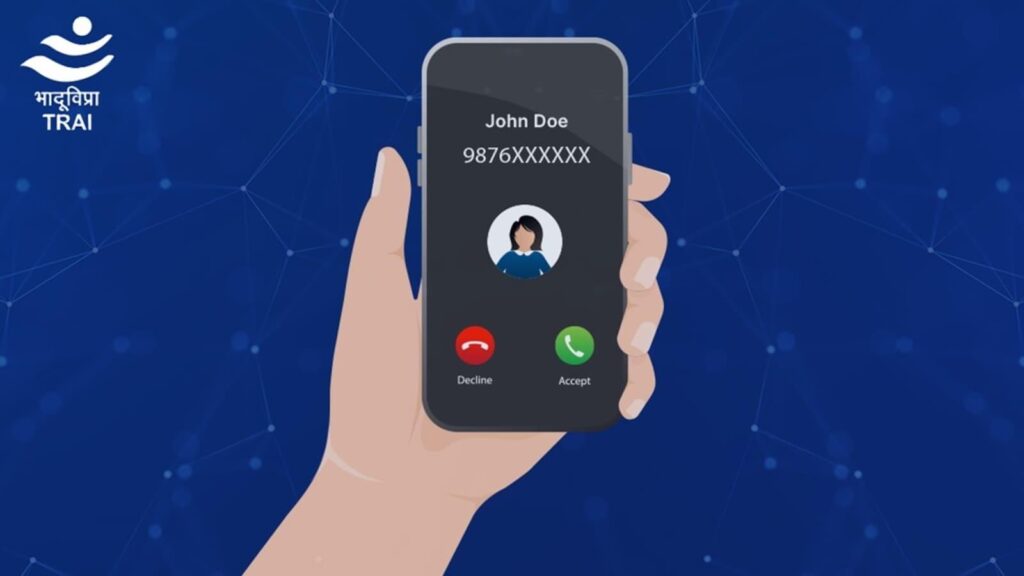

For years, one of the easiest ways to avoid an unwanted phone call has been to let an unknown number ring. Some people rely on Truecaller, others simply ignore numbers they don’t recognise. But India is now taking a different approach to solving this problem.
Starting November 1, 2026, telecom operators are scheduled to begin implementing a system called Calling Name Presentation (CNAP), which will display a caller’s registered name alongside their phone number on the recipient’s mobile screen.
In simple terms, your phone could tell you who’s calling even if you have never saved that number in your contacts.
What exactly is CNAP?
CNAP stands for Calling Name Presentation. It is a telecom-network-based caller identification service that uses subscriber information maintained by mobile operators.
When somebody calls you, the receiving telecom network can retrieve the caller’s registered name from the operator’s subscriber database and display it along with the incoming number.
This is different from how applications such as Truecaller generally identify callers. Those apps rely on their own databases and other permitted data sources, whereas CNAP uses information maintained by telecom operators.
The idea is straightforward: provide a more dependable way of identifying unknown callers without requiring everyone to install another application.
How will it work?
Imagine receiving a call from a number you have never seen before.
Today, your screen may simply display a ten-digit mobile number. With CNAP, the system can display the name associated with that number in the telecom operator’s records.
The Department of Telecommunications has directed operators to implement the service across their service areas. The initial rollout covers 4G and newer networks, while implementation for older 2G and 3G networks and landlines is being taken up separately.
The service is intended to be enabled by operators by default, rather than requiring subscribers to download an app or manually activate it.
Does this mean Truecaller is no longer needed?
Not necessarily.
CNAP and Truecaller have different approaches to identifying callers. CNAP displays the registered subscriber name, while Truecaller offers additional features such as spam reports, community-based identification and business caller information.
CNAP could make basic caller identification more widely accessible, but it does not automatically mean that every fraudulent or spam call will be identified.
A scammer could still use a legitimate registered number, a compromised account or other methods to deceive someone.
What about privacy?
This is an important part of the rollout.
The system is designed around telecom subscriber records. The framework also includes safeguards for subscribers who use Calling Line Identification Restriction (CLIR), which allows their number and associated identity to be withheld.
Operators are expected to follow security-by-design principles when handling caller-name information.
Users should also understand that the displayed name is the name associated with the telecom records, not necessarily independent proof of the caller’s identity.
The bigger picture
India receives enormous volumes of commercial, promotional and fraudulent calls. A network-level caller identification system could make everyday communication more convenient and help people make better decisions before answering unfamiliar numbers.
However, its real success will depend on how accurately subscriber records are maintained, how consistently operators implement the service and whether users understand its limitations.
Our take: CNAP could be one of the more useful telecom changes for ordinary Indian smartphone users. It may not eliminate spam calls, but knowing who is calling before answering is certainly a good place to start.
Source: Department of Telecommunications rollout reported by Moneycontrol and Business Standard.